Science & Evidence
Proof belongs to a specific test.
This library separates instrument measurements, controlled comparisons, visual demonstrations, and the JR East field study—so each result keeps its own method and boundary.
Technology measurement
Ultrafine bubbles measured after 49 ft (15 meters) of piping.
For the representative BeLife NPS 3/4 (20A), Fuji Keiki reports an average count of approximately 18.1 million and an average diameter of approximately 142.9 nm under the stated 2025 test conditions.
Cleaning & surface comparisons
Six visual comparisons from Fuji Keiki's published tests.
The first three visuals are high-resolution recreations of the published comparisons. The additional laundry and washbasin cards preserve the supplied source photographs within clean comparison frames. Every card remains attached to its documented setup and is not a universal performance promise.
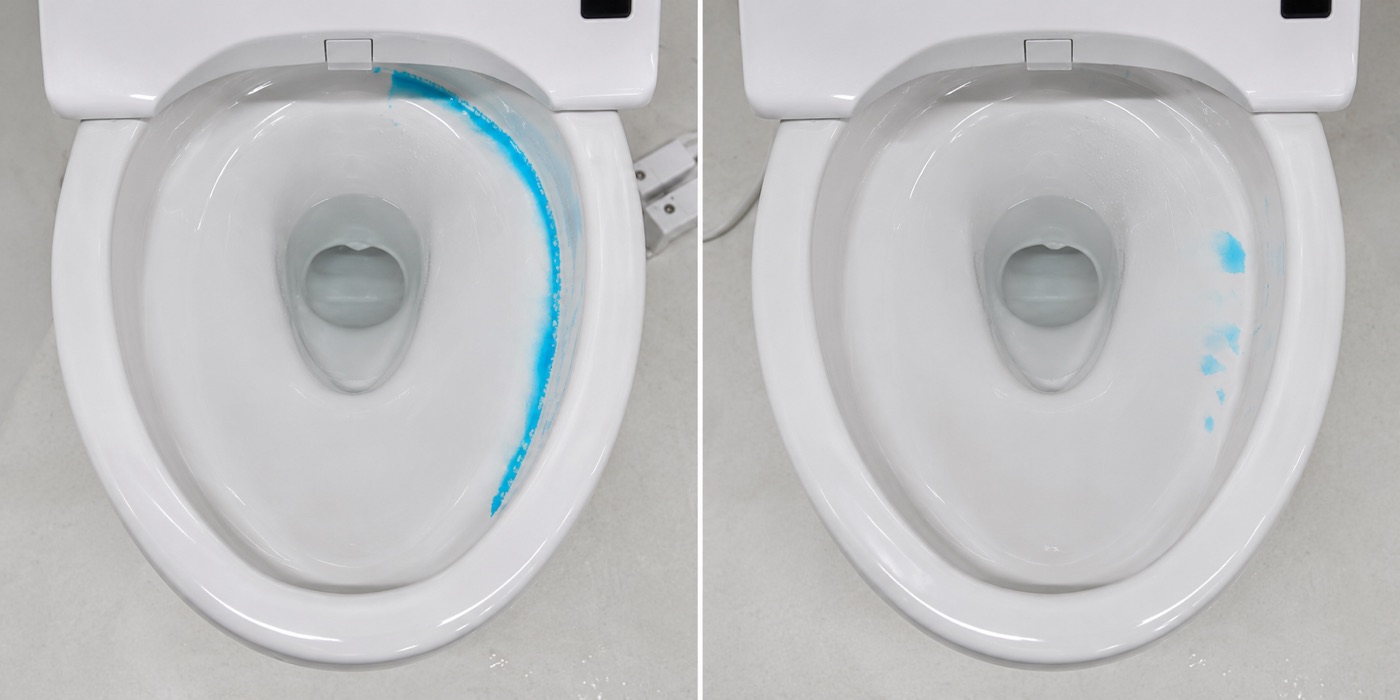
TAP WATERBE-LIFE WATER
FOURTH-RINSE FIXTURE TEST
Simulated fixture residue
Blue food coloring and starch syrup were used as simulated soil, then the fourth rinse was compared.
BeLife NPS 3/4 (20A) · 58.6°F (14.8°C) · 0.90 gpm (3.4 L/min) · approximately 23 ft (7 m) of piping
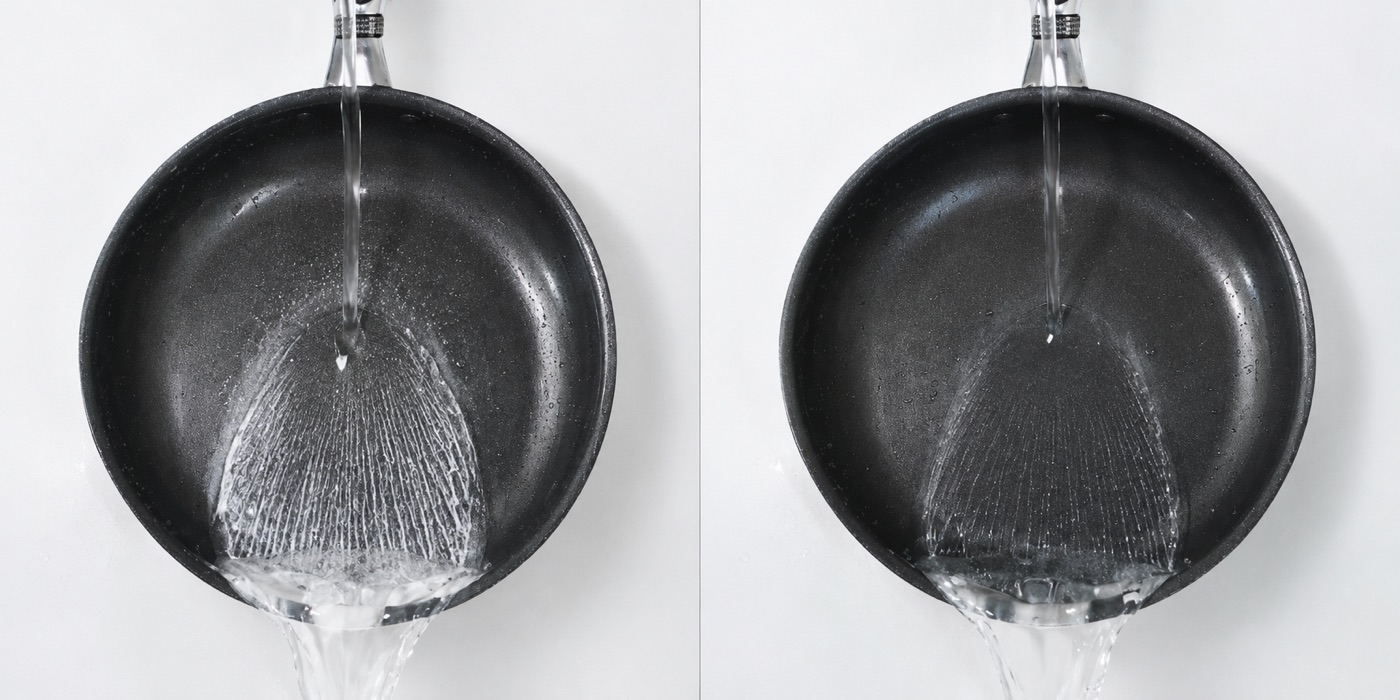
TAP WATERBE-LIFE WATER
30-SECOND OIL-CLEANING TEST
Oil-residue cleaning
Salad oil and white food coloring were used as simulated soil on a frying pan before a 30-second rinse.
BeLife NPS 3/4 (20A) · 50°F (10°C) · 1.3 gpm (5 L/min) · approximately 43 ft (13 m) of piping
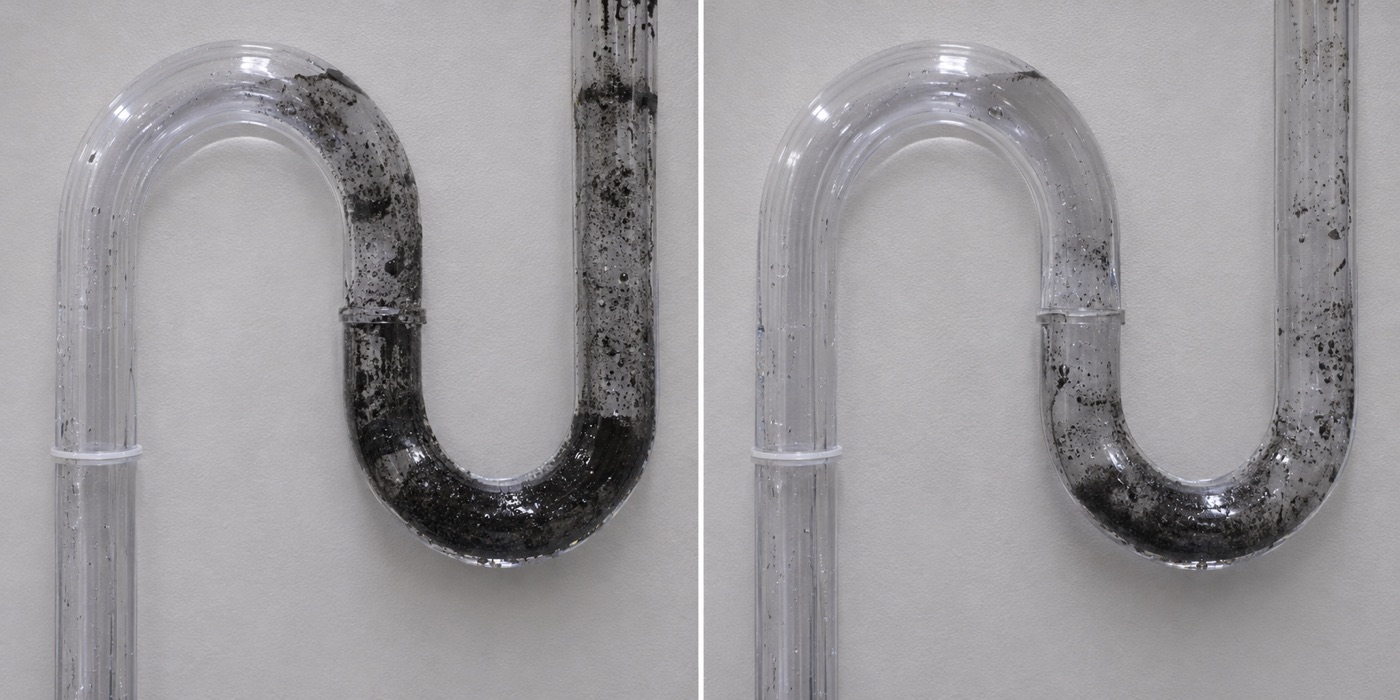
TAP WATERBE-LIFE WATER
60-SECOND DRAIN-PIPE TEST
Drain-pipe residue
Black toner was used as simulated soil in transparent acrylic piping before a 60-second water-flow comparison.
BeLife NPS 3/4 (20A) · 72.5°F (22.5°C) · 1.3 gpm (5 L/min) · approximately 43 ft (13 m) of piping
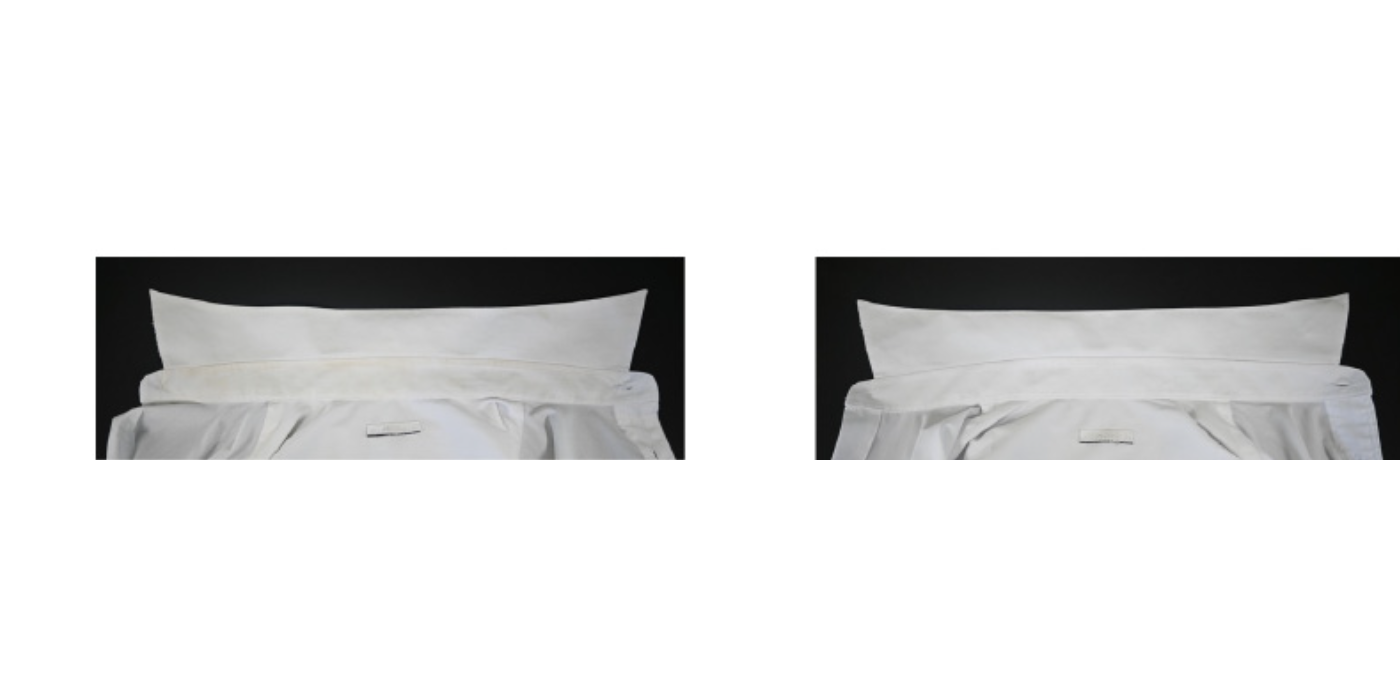
TAP WATER · 10 MONTHSBE-LIFE WATER · 10 MONTHS
LONG-TERM LAUNDRY COMPARISON
Laundry appearance after 10 months
Fuji Keiki compared garment appearance after repeated wear and washing under the same documented conditions.
BeLife NPS 3/4 (20A) · average 57.2°F (14°C) · 4.0 gpm (15 L/min) · approximately 16 ft (5 m) of piping · 0.71 oz (20 g) liquid detergent
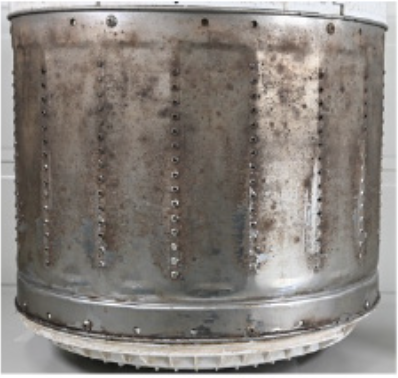
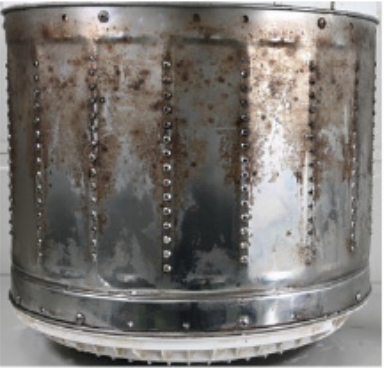
BEFORE90 DAYS
WASHER-DRUM TIME SERIES
Washer-drum self-cleaning observation
The simplified comparison shows the drum before testing and after 90 days of continued daily washing.
BeLife NPS 3/4 (20A) · average 57.2°F (14°C) · 4.0 gpm (15 L/min) · approximately 16 ft (5 m) of piping · 0.71 oz (20 g) liquid detergent per wash
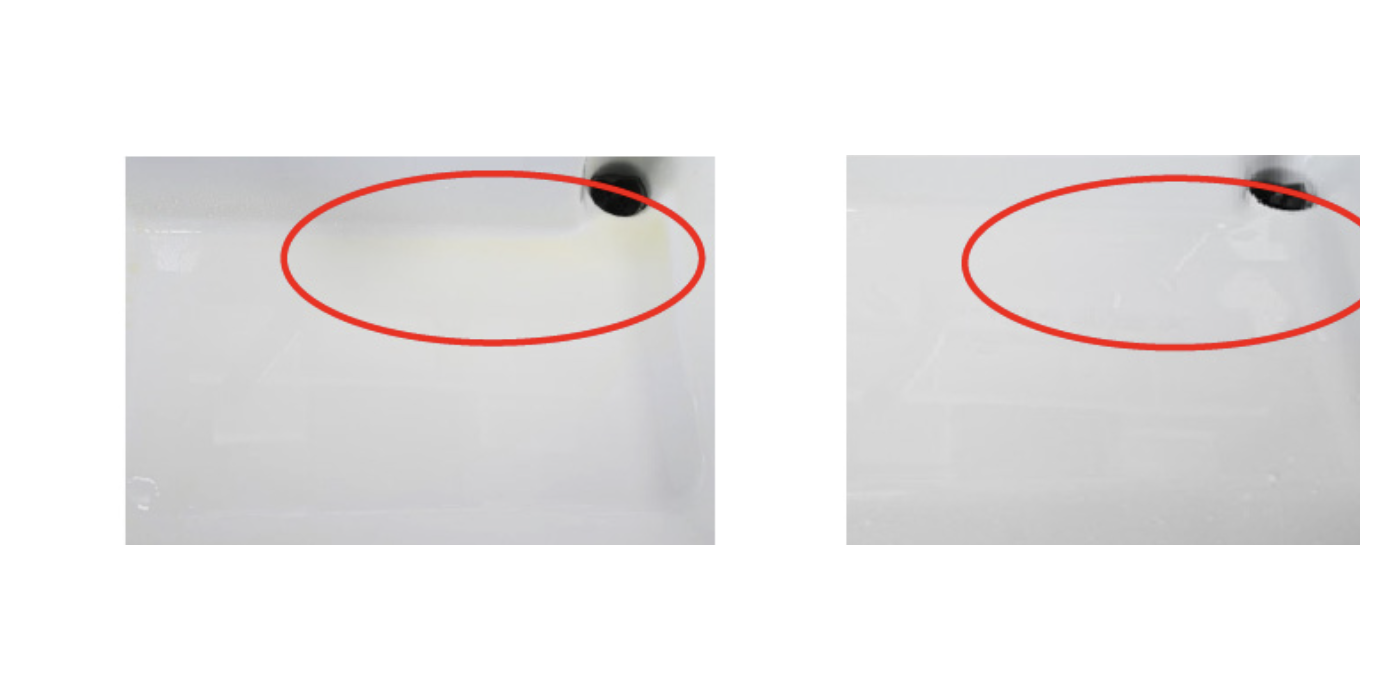
TAP WATERBE-LIFE WATER
SIMULATED HAND-SOIL TEST
Washbasin residue
Simulated soil made with starch syrup and food coloring was applied to both hands, then basin residue was compared after repeated hand washing.
BeLife NPS 3/4 (20A) · 53.6°F (12°C) · 0.53 gpm (2 L/min) · approximately 26 ft (8 m) of piping
Tap water vs BeLife water
Read each comparison in its own measurement frame.
These charts place the control and BeLife result side by side. The axis language changes with the test: normalized index, removal rate, or change from baseline. None of these figures is the JR East 55-day trimethylamine result.
CONTROLLED VEHICLE-PANEL TEST
Water-spot residue
Fuji Keiki reports improved removal versus tap water after two controlled drying intervals on a prepared bonnet panel.
Artificial potassium-chloride water spots · BeLife NPS 3/4 (20A) · 57.2°F (14°C) water · 70% humidity · 290 psi (2.0 MPa) · 4.5 gpm (17 L/min) · approximately 49 ft (15 m) of piping · SSM-21P surface salinity meter
10-minute drying
100
Tap water
49
BeLife water
51% reported improvement
30-minute drying
100
Tap water
31
BeLife water
69% reported improvement
Normalized residual index derived from Fuji Keiki's reported improvement figures; tap water = 100.
CONTROLLED TOILET-BOWL WASHING TEST
Ammonia reduction rate
+40.1percentage points
Percent reduction in measured ammonia concentration after washing under the controlled setup.
34.1%
Tap water · ammonia reduction
74.2%
BeLife water · ammonia reduction
Tap water reduced the measured concentration by 34.1%; BeLife water reduced it by 74.2%. The difference is 40.1 percentage points. This is not the JR East field-study outcome.
SIMULATED LAUNDRY-ODOR TEST
Odor removal rate
+15.8percentage points
Five-test average removal rates reported for simulated ammonia odor in washer drums.
76.2%
Tap water · odor removal
92.0%
BeLife water · odor removal
Reported remaining concentration was 23.8 ppm with tap water versus 8.0 ppm with BeLife water.
CONTROLLED HAND-CLEANSING TEST
Foundation removal rate
+13.4percentage points
Reported removal rates after a 30-second rinse under the supplied controlled conditions.
62.2%
Tap water
75.6%
BeLife water
Ten participants; foundation applied to the backs of the hands; 104°F ±3.6°F (40°C ±2°C); 1.8 gpm (6.9 L/min); approximately 26 ft (8 m) of piping; BeLife NPS 3/4 (20A).
SKIN MOISTURE EVALUATION
Moisture retention rate
+7percentage points
Reported rates after the controlled foot-immersion procedure.
74%
Tap water
81%
BeLife water
A test-specific moisture measurement. This presentation does not imply medical efficacy or clinical certification.
SURFACE-TEMPERATURE EVALUATION
Temperature retention rate
+1.96%reported relative improvement
Reported rates after the controlled foot-immersion and retention interval.
93.7%
Tap water
95.6%
BeLife water
Eight participants; five-minute immersion followed by a five-minute retention interval. The values are test-specific surface-temperature retention rates.
Reported results
The number, measure, and setup stay together.
+40.1Ammonia reduction-rate differencePercentage points · controlled toilet-bowl washing test
Reported reduction rates were 34.1% with tap water and 74.2% with BeLife water. BeLife NPS 3/4 (20A); tap water; 68°F ±3.6°F (20°C ±2°C); 0.90 gal (3.4 L) wash-water volume; ten measurements; approximately 26 ft (8 m) of piping. This controlled ammonia test is not the JR East result.
15.8%Laundry odor improvementSimulated ammonia odor in washer drums
Fuji Keiki reports 23.8 ppm remaining with tap water versus 8.0 ppm with BeLife water in five-test averages, corresponding to removal rates of 76.2% and 92.0%. BeLife NPS 3/4 (20A); 56.3°F (13.5°C); 4.0 gpm (15 L/min); approximately 16 ft (5 m) of piping.
13.4%Skin-cleaning improvementFoundation removal comparison
Ten participants; 30-second rinse; 104°F ±3.6°F (40°C ±2°C); 1.8 gpm (6.9 L/min); approximately 26 ft (8 m) of piping; BeLife NPS 3/4 (20A) representative product.
7%Skin-moisture improvementControlled immersion measurement
Fuji Keiki reports an approximately 7% improvement under the published BeLife NPS 3/4 (20A) test conditions. The result is test-specific and is not a medical claim.
1.96%Surface-temperature retentionFive minutes after controlled immersion
Eight participants; five-minute immersion; measurement after a further five minutes; 104°F ±3.6°F (40°C ±2°C); 2.2 gpm (8.5 L/min); approximately 26 ft (8 m) of piping; BeLife NPS 3/4 (20A) representative product.
51 / 69%Water-spot residue reduction10- / 30-minute controlled drying intervals
One controlled bonnet-panel test using artificial potassium-chloride water spots. Fuji Keiki reports 51% improvement after 10 minutes of drying and 69% after 30 minutes; BeLife NPS 3/4 (20A); 57.2°F (14°C) water; 70% humidity; 290 psi (2.0 MPa) washing pressure; 4.5 gpm (17 L/min); approximately 49 ft (15 m) of piping.
Field evidence · JR East
55 days in an operating restroom.
The JR East study reported a reduction in trimethylamine, an odor-associated compound. It remains separate from the controlled ammonia test above.
Read the case study55days
field environment
field environment
Build the next field dataset
Apply for a Pilot