In-line operation
The device uses the water line's existing flow rather than a separate treatment cycle.
BeLife is installed in the water line and uses Fuji Keiki's CORE WITH HOLES negative-pressure design to generate ultrafine bubbles through rotation and pressure change in the flow.
Eight Fuji Keiki models cover applications from a single fixture or compact branch to larger building mains. Final size and connection details are confirmed during pilot engineering.
| U.S. nominal size / Fuji Keiki model | Typical pilot scope | Bubble count | Average diameter | Test pressure |
|---|---|---|---|---|
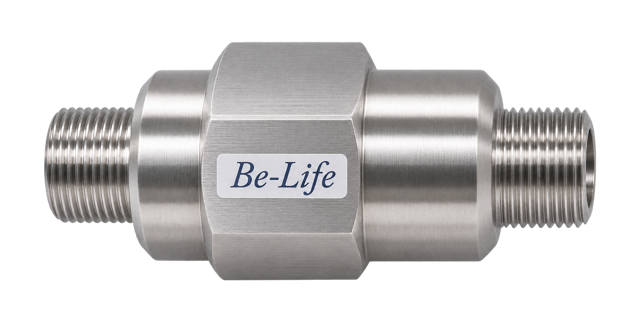 NPS 1/2 in.BeLife model 15A | Single fixture or compact point-of-use line | 20.4 million (reported) | 122.5 nm | 36.3 psi (0.25 MPa) |
| NPS 3/4 in.BeLife model 20A | Single room or small fixture group | 22.0 million (reported) | 106.1 nm | 36.3 psi (0.25 MPa) |
| NPS 1 in.BeLife model 25A | Apartment, suite, or small plumbing branch | 22.1 million (reported) | 108.9 nm | 36.3 psi (0.25 MPa) |
| NPS 1 1/4 in.BeLife model 32A | Larger fixture group or departmental branch | 24.6 million (reported) | 106.0 nm | 36.3 psi (0.25 MPa) |
| NPS 1 1/2 in.BeLife model 40A | Multi-room branch or small commercial zone | 22.2 million (reported) | 103.1 nm | 36.3 psi (0.25 MPa) |
| NPS 2 in.BeLife model 50A | Large branch, floor, or light whole-building pilot | 22.2 million (reported) | 90.4 nm | 36.3 psi (0.25 MPa) |
| NPS 2 1/2 in.BeLife model 65A | Building main or higher-flow commercial system | 23.1 million (reported) | 90.5 nm | 14.5 psi (0.10 MPa) |
| NPS 3 in.BeLife model 80A | Large building main or campus-scale branch | 24.6 million (reported) | 101.4 nm | 14.5 psi (0.10 MPa) |
U.S. sizing note: U.S. NPS sizes lead throughout this table; A-series model names are retained as published by Fuji Keiki for technical traceability. NPS values are nominal-size equivalents for orientation—not dimensional, thread, flange, or connection guarantees. Final model and connection details must be confirmed during pilot engineering by Fuji Keiki and a qualified plumbing professional.
Representative product-family image shown for orientation. Model-specific photography and dimensional drawings should replace these thumbnails when supplied by Fuji Keiki.
Water passes through Fuji Keiki's internal CORE WITH HOLES geometry, which introduces rotation and pressure change. Under the documented test conditions, downstream water contained ultrafine bubbles measured with NanoSight instrumentation.
The illustration explains the published generation principle. It does not claim a guaranteed outcome in every water system.
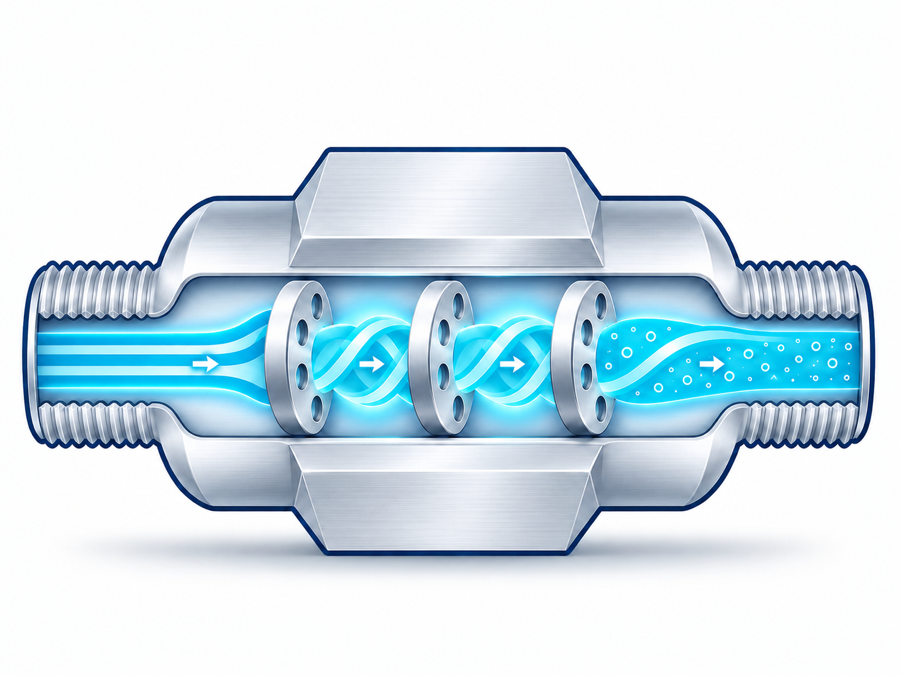
The device uses the water line's existing flow rather than a separate treatment cycle.
Bubble generation comes from the internal flow geometry—not chemical injection.
The device is designed to operate without routine filter or cartridge replacement.
Install BeLife for one room, a plumbing branch, or a building main. A qualified plumbing professional confirms the appropriate line, connection, pressure, space, and local requirements.
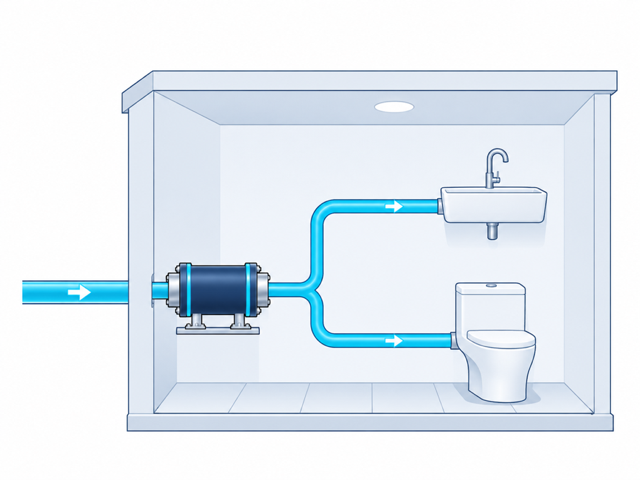
Install on the branch serving a defined restroom, laundry area, treatment room, or specialty cleaning zone.
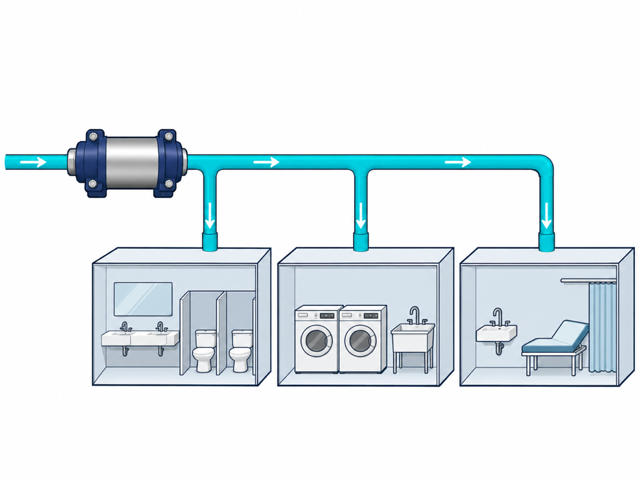
Treat the water distributed to a department, floor, restroom bank, or operational area from one accessible line.
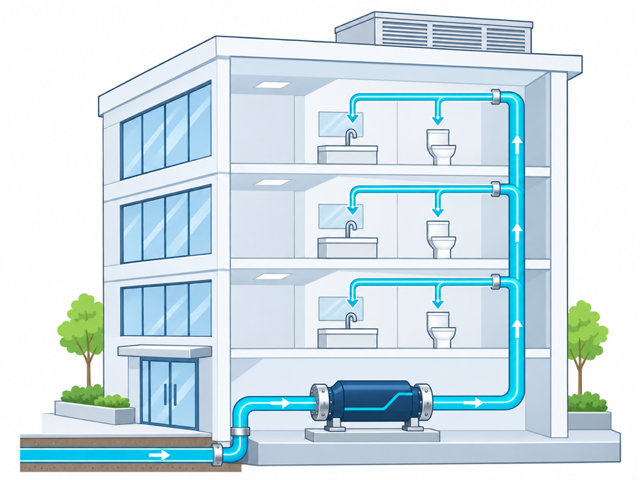
Position at the appropriate building entry point so downstream outlets receive water that has passed through BeLife.
Review representative construction data, Japanese certifications, laboratory methodology, evidence sources, and their relevance to U.S. installations.